Quant Trading News: Record Week, China Curbs, AI Surge
This quantitative trading news roundup covers the five stories that mattered most for systematic traders during the week of August 3-9, 2026. From a record S&P 500 close above 7,700 to a Chinese crackdown on high-frequency order flow, the signals were loud and directional.
How This Was Verified
This report is based on primary sources including the Palantir SEC 8-K filing, the ISM official manufacturing report, and CNBC and Investopedia market coverage. Earnings figures were cross-checked against the SEC exhibit; China regulatory details against Bloomberg and Conventus Law. We did not independently confirm forward guidance, unannounced roadmap items, or SpaceX’s internal infrastructure plans. Last verified: August 2026.
Palantir Q2 Blowout Reshapes Earnings-Surprise Models
Palantir reported Q2 2026 revenue of $1.935B (+93% YoY) with U.S. commercial revenue of $764M (+149% YoY) on August 3, according to the SEC 8-K filing — the magnitude of this beat and the FY26 guidance raise to +82% growth make it a textbook earnings-surprise factor signal.
The stock surged 20-30% on August 4. The company raised FY26 guidance to $8.150-8.158B (+82% YoY) and closed 220 deals worth at least $1M. For quant models, this is a momentum continuation trigger in AI software names. Our Palantir deep analysis anticipated this commercial growth trajectory.
China Quant Crackdown: Order-Rate Limits and Co-Location Bans
Chinese stock exchanges banned broker LAN connections to market data this week, imposing abnormal trading thresholds of 300 order submissions or cancellations per second and 20,000 per account per day, per Bloomberg — a microstructure regime shift in A-shares that invalidates co-location and latency-arbitrage strategies overnight.
Roughly 71 China quant managers now exceed ¥10B AUM. The curbs reduced volatility but sapped turnover, creating a liquidity paradox. A Conventus Law analysis frames this as an informal regulatory response that other jurisdictions may copy. Quant models trading A-shares must recalibrate order-to-trade ratios, latency assumptions, and volatility forecasts. See our sector trackers for cross-market regime monitoring.
ISM Manufacturing PMI 55.6: Macro Divergence Signal
The ISM Manufacturing PMI hit 55.6 in July, up 2.3 points from June’s 53.3 and the fastest pace since May 2022, per the ISM official report — with the Employment Index at 52.8 (first expansion in 33 months) and Production at 58.5 (highest since November 2021), this directly contradicts the -23K payrolls print later in the week.
For factor and rotation models, this macro-divergence is actionable. AI-capex-driven factory expansion is decoupling from broader labor market weakness. Factor models should overweight production-linked and semiconductor-adjacent sectors while underweighting consumer-discretionary, rate-sensitive names. The quant research hub tracks these regime shifts for systematic strategy calibration.
Nvidia +10% Week on SpaceX Vera Rubin Endorsement
Elon Musk said on SpaceX’s first post-IPO earnings call that the company will build “exclusively on Nvidia” because “the Vera Rubin architecture is the best architecture,” per CNBC market coverage — NVDA rose 10%+ for the week, SOXX gained 7%+, and SpaceX (SPCX) added 19% as a new large-cap AI-infrastructure name.
This endorsement is a durable demand signal for AI-infrastructure models. Semis factor positioning shifted meaningfully, and the SpaceX IPO adds a new liquid large-cap to AI-infrastructure baskets and universe construction. See our AMD deep analysis for the competitive semiconductor context.
Record Market Week: S&P 500 Above 7,700 First Time
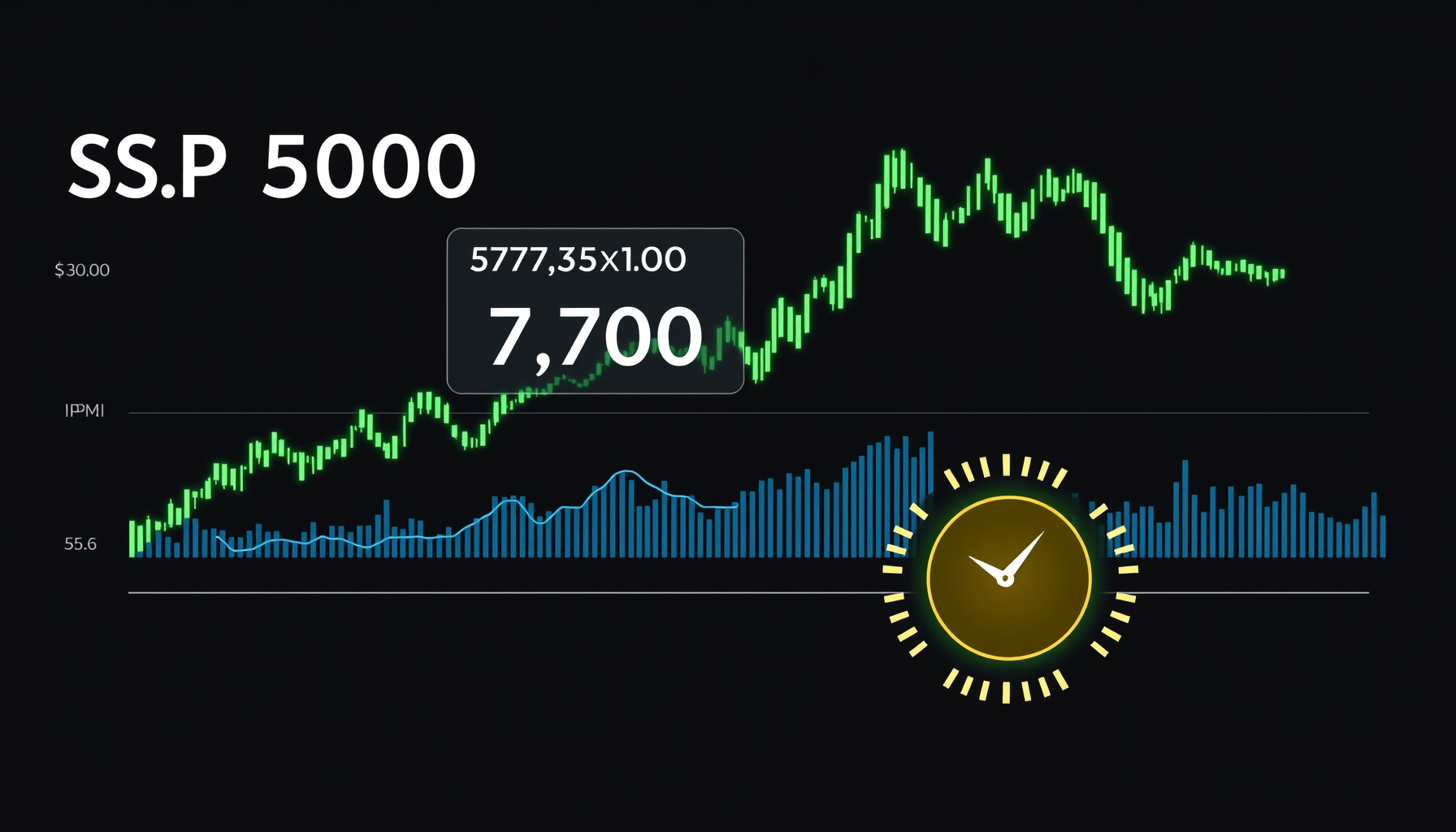
The S&P 500 closed at a record 7,757.64 on August 7 — the first-ever close above 7,700 — with weekly gains of S&P +3.6% and Nasdaq +5.2% on the chip rebound, according to Investopedia — a jobs miss of -23K versus +83K forecast drove fed-funds repricing and collapsed September rate-hike odds.
For trend and volatility regime models, this is a record-close momentum signal layered on rate-path repricing. The CNBC live coverage documented the intraday volatility around the jobs report. Models that tracked fed-funds futures captured the shift early.
Model Calibration Checklist
For systematic teams updating after this week’s regime shifts, the changes cluster into four actionable areas:
-
A-share execution logic. The new thresholds — 300 orders or cancellations per second, 20,000 per account per day [Bloomberg] — are hard caps, not advisory targets. Rebuild order-splitting and cancellation logic to stay under them, and re-run any co-location-dependent backtests with flat latency assumptions. The Conventus Law analysis suggests the enforcement style may spread to other jurisdictions, so build the constraint in generically rather than hard-coding it for China.
-
Factor exposure shifts. Macro divergence is the week’s loudest cross-sectional signal. ISM Production at 58.5 and Employment at 52.8 [ISM] point to goods-producing strength, while the -23K payroll print [Investopedia] says consumer-facing labor is cooling. Rebalance factor tilts toward production-linked and AI-capex names, and trim rate-sensitive consumer discretionaries until the two series converge.
-
Momentum and universe construction. The S&P record close and NVDA’s +10% week [CNBC] extend momentum in AI-infrastructure. Add SPCX to large-cap AI baskets now that it trades as a liquid post-IPO name. Set explicit exit rules — a weekly close below the 7,500 round number would break the trend structure.
-
Tail-risk budgeting. Record closes with collapsing rate-hike odds read as complacency. The China turnover data shows liquidity can evaporate without warning. Keep a defined tail-risk sleeve funded, and rebalance vol forecasts to reflect the lower-turnover regime in A-shares.
What This Means for Quant Models
This week delivered a coherent signal set. Earnings-surprise factors fired on Palantir; momentum factors confirmed on Nvidia and the S&P record close. The China order-rate limits are a structural change requiring immediate model recalibration for A-share strategies — alpha sources must shift from speed to alternative data and longer-horizon signals.
The macro divergence — strong ISM versus weak payrolls — is a rotation signal. Factor models should overweight production-linked sectors and underweight rate-sensitive ones. The fed-funds repricing adds fuel to growth and AI-infrastructure names. Our quant research and analysis hub tracks these regime shifts.
Volatility models face a mixed regime: record closes with collapsing rate-hike odds suggest complacency, while China’s turnover sapping and regulatory risk argue for tail-risk hedging. The coming weeks will test whether trend models can hold positions through the next payroll print.
What to Watch Next Week
Three data points will determine whether the momentum regime extends or stalls:
-
CPI and PPI prints (August 12-13). With fed-funds rate-hike odds collapsing after the payroll miss, inflation is the next swing factor. A hot CPI would reprice the rate path quickly and hit growth and AI-infrastructure names; a cool print extends the rally. Models with rate-sensitivity factors should have both scenarios parameterized.
-
Initial jobless claims. The -23K payrolls print [Investopedia] conflicts with ISM Employment at 52.8 [ISM]. Claims data for the week ending August 9 will show which series is leading. A rising claims trend confirms the labor-market cooling signal and strengthens the case for rate cuts.
-
Semiconductor follow-through. NVDA’s +10% week [CNBC] on the SpaceX Vera Rubin endorsement needs confirmation. Watch SOXX for whether the bid holds above prior resistance. Momentum models should treat a fade back below the pre-endorsement level as a failed breakout signal rather than averaging into the move.
For systematic teams, the cleanest way to capture this is to treat the record close as a regime marker, not a standalone entry — layer it with volatility and rate-expectation filters, exactly as the Investopedia analysis frames the mixed tape.
FAQ
How do China’s order-rate limits affect high-frequency trading strategies?
The 300 orders-per-second and 20,000 per-day thresholds effectively ban aggressive HFT order flow in A-shares, per Bloomberg. Strategies relying on order cancellation and submission speed must shift to lower-frequency signals or face abnormal trading flags. The curbs reduced volatility but sapped turnover.
What does the ISM-PMI versus payrolls divergence signal for factor rotation?
The ISM manufacturing expansion at 55.6 with production at 58.5 signals strength in goods-producing sectors, while -23K payrolls indicate labor market weakness. Factor models should tilt toward production and AI-capex-linked factors and away from consumer-discretionary, rate-sensitive factors, per the ISM report.
Is the S&P 500 record close above 7,700 a reliable momentum signal?
Record closes above psychologically significant levels historically trigger trend-following buy signals. However, the concurrent jobs miss and rate-path repricing create a mixed regime, according to Investopedia. Models should combine the momentum signal with volatility and rate-expectation data rather than relying on the breakout alone.
How should quant teams treat Palantir’s earnings surprise?
Palantir’s Q2 beat — $1.935B revenue (+93% YoY) with U.S. commercial at $764M (+149% YoY) — is a textbook earnings-surprise factor trigger, per the SEC 8-K. The 220 deals over $1M and the FY26 guidance raise to +82% growth indicate the surprise has a persistence component, not just a one-day gap. Earnings-surprise models should treat the guidance raise as a second signal event, extending the post-earnings drift window for AI software names.
What is the single most important model change after the China curbs?
The order-rate limits invalidate speed-based alpha in A-shares. Any strategy whose edge depends on sub-second order flow — co-location, aggressive cancellation, latency arbitrage — must be retired or rebuilt around the 300-per-second and 20,000-per-day caps, per Bloomberg. Reallocate that alpha budget to alternative data and longer-horizon signals, which are unaffected by the microstructure rule.
← Back to all posts