AI Semiconductor Earnings: Nvidia Blowout Meets Hawkish Fed
Meta description: AI semiconductor earnings — recalibrate your quant models for a hawkish-Fed, high-capex regime with our verified weekly roundup and actionable checklist.
The week’s through-line for quant traders is unmistakable: AI semiconductor earnings hit a record high with Nvidia’s blowout quarter even as Fed Chair Warsh’s hawkish Jackson Hole pivot collapsed rate-cut expectations. The tension between AI-capex momentum and a tightening cycle defines the September setup, and this roundup gives you the verified data to recalibrate factor, duration, and volatility models ahead of the FOMC.
How This Was Verified
This roundup synthesizes reporting from NVIDIA’s official newsroom, the Federal Reserve’s speech archive, the Bureau of Economic Analysis, CNBC, The Information, Fortune, Tom’s Hardware, Zacks, CME FedWatch, Kitco, StockAnalysis, and the Bureau of Labor Statistics. Earnings figures, dates, stock closes, Fed speech text, PCE release data, and GDP second estimate were all verified via HTTP-200 URLs. What was NOT independently confirmed: the Nvidia–Hugging Face acquisition (reported by The Information, CNBC, Fortune, Reuters but not confirmed by either party); DXY closing level; 30Y Treasury close; VIX weekly change. Last verified: August 30, 2026.
AI Semiconductor Earnings: What Did Nvidia Report This Quarter?
Nvidia posted record Q2 FY27 revenue of $96.22B, beating consensus by ~$4B, driven by $89B in Data Center revenue, and guided Q3 to $108B on the back of Vera Rubin’s fastest-ever ramp. Revenue grew +106% year-over-year and +18% quarter-over-quarter against ~$92.3B consensus, with non-GAAP EPS of $2.22 versus ~$2.09 expected NVIDIA newsroom. Data Center revenue hit $89.0B, up 117% year-over-year and representing ~92% of total revenue, at a 75.0% gross margin. Q3 guidance of $108B ±2% crushed the ~$104.2B consensus, with no China Data Center compute revenue assumed in the guide. Vera Rubin is in full production with ~$20B in Q3 Rubin sales — the fastest ramp in company history Tom’s Hardware. AWS committed to 1M+ GPUs, and Nvidia returned $26B to shareholders with $99B in buyback authorization remaining NVIDIA newsroom. For deeper context, see our AI capex tracker.
How Did Nvidia Stock React After Earnings?
NVDA surged 8.74% Thursday to $227.98 — its first positive post-earnings session in five quarters — before pulling back 4.57% Friday to $217.55 on profit-taking and hawkish Fed repricing. The stock closed Wednesday at $209.66 ahead of the report, then jumped Thursday as the market digested the $108B guide and Vera Rubin ramp, before Friday’s macro-driven reversal StockAnalysis. The round trip left NVDA up roughly 3.8% from Wednesday’s close.
What Did Fed Chair Warsh Signal at Jackson Hole?
Warsh delivered a hawkish Jackson Hole keynote on August 28, calling 2% a “firm, fixed target” and warning the Fed still has “work to do,” which drove September hike odds from ~35% to 57.5% and triggered a broad risk-off move across bonds, gold, and crypto. In his speech “In Our Time,” delivered on his 100th day as Chair, Warsh cited PCE inflation at 3.7% over 12 months and 4.1% over six months Fed speech. He stated, “We must be confident that underlying inflation is moving to our objective, clearly and at sufficient speed. Otherwise, we have work to do,” and slammed forward guidance as having “overstayed its welcome.” He framed AI as a productivity shock with >$100B annualized token sales (+500% year-over-year), announcing a Fed productivity and jobs task force. September hike odds jumped to 57.5% Friday from ~35.4% Thursday CME FedWatch via CNBC, sending the 2-year yield up 11.8bp to 4.348%, gold down 2.9%, and Bitcoin below $77K CNBC, Kitco. See our Fed September FOMC preview for scenario analysis.
What Did July PCE Inflation Data Show?
July core PCE came in at 3.3% year-over-year, one-tenth above the 3.2% consensus, reinforcing the hawkish case Warsh made two days later at Jackson Hole. Headline PCE held at +3.7% year-over-year with a +0.2% month-over-month gain, unchanged from June BEA. Core PCE rose 0.2% month-over-month, also matching June’s pace but landing above expectations — a data point that gave Warsh’s “work to do” language immediate empirical support.
Is Nvidia Buying Hugging Face?
Multiple outlets reported on August 26–27 that Nvidia agreed to acquire Hugging Face for $12.9B, which would be its largest deal ever, but neither company has officially confirmed the transaction as of August 30. The Information first reported the deal on August 26 evening, with CNBC, Reuters, and Fortune matching the story the following day CNBC, Fortune. Hugging Face was last valued at $4.5B in 2023, making the reported price a 187% premium. Until official confirmation, treat this as binary event risk for AI-ecosystem baskets.
How Did Marvell Technology Report?
Marvell beat on revenue and EPS but shares fell 7% after the company pushed Google AI revenue recognition to FY2029, signaling a timing reset rather than a demand shortfall. Revenue came in at $2.74B versus $2.71B consensus, with EPS of $0.94 against $0.92 expected Zacks, Shacknews. Data Center revenue grew 46% year-over-year to $2.17B. Marvell reiterated FY27 targets of $12B and FY28 of $18B, but the Google AI revenue push to FY2029 — with GOOGL warrants now up to 7% — spooked the market. The selloff reflects duration risk in AI revenue recognition, not a demand signal.
What Macro Data Landed This Week?
The macro stack was soft: GDP revised to just 1.5%, consumer confidence dipped, and the BLS preliminary benchmark revision slashed 178K private-sector jobs, while new BLS long-term projections introduced AI-exposure job categories for the first time. Q2 GDP second estimate came in at +1.5% BEA. Conference Board Consumer Confidence fell to 89.4 in August from 90.2 in July Conference Board, and UMich Consumer Sentiment final read 51.7 versus 51.0 preliminary and 55.2 in July UMich. The BLS preliminary benchmark revision cut 79K nonfarm and 178K private-sector jobs Market Review, while initial jobless claims held at 203K DOL via CNBC. The BLS also debuted AI-exposure occupational categories in its 2025–35 projections Market Review. For systematic context, see our market sentiment analysis.
What Happened in the Quant and ML Ecosystem?
Z.ai open-sourced GLM-5.3-Flash, a 320B-parameter MoE model with a 1M-token context window under MIT license, while the SEC advanced crypto custody rule changes and Trump Media’s HFT data feed drew scrutiny. GLM-5.3-Flash uses a 320B-A18B mixture-of-experts architecture, is natively multimodal, and costs $0.045 per task — a significant price point for inference workloads Z.ai. The SEC sent its crypto custody rule rewrite to OMB on August 25 Crypto.news. Trump Media launched a Truth API HFT data feed at ~$100K/month, attracting regulatory attention.
Where Did Markets Close This Week?
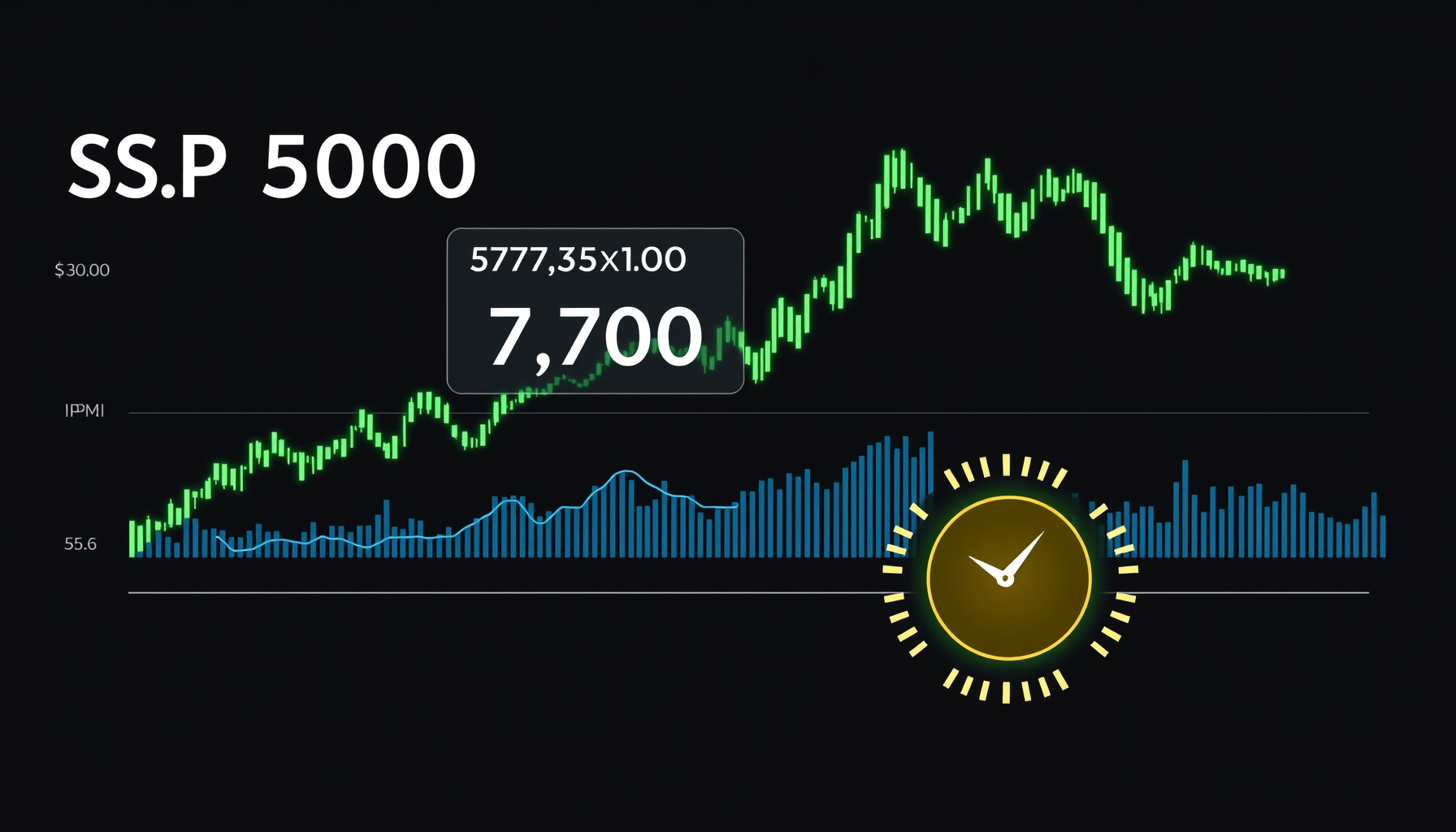
The S&P 500 gained 0.5% on the week to 7,711.76 but small caps lagged badly with the Russell down 1.5%, while gold broke below its 200-day moving average and Bitcoin pulled back from $81K on hawkish-Fed repricing. Friday closes: S&P 500 at 7,711.76 (+0.5% week, −0.25% Friday), Dow at 53,559.99 (+0.5% week), Nasdaq at 26,402.42 (+0.8–0.9% week), Russell 2000 at 2,972.37 (−1.5% week), VIX at 14.45. The 10-year yield sits near 4.65–4.7% with the 2-year at 4.348%. Bitcoin closed near $77.6K after a weekly high of $81,455, still up 23.2% since August 15; BTC ETFs saw $202M outflows Friday, ending a nine-day inflow streak. Gold closed at $4,567.23, down 2.9% Friday and breaking below its 200-day moving average at $4,526 intraday. See our treasury term premium analysis for duration positioning.
What Should Quant Traders Watch Next Week?
The September catalyst calendar is packed: Broadcom earnings on Sep 2 will extend the AI-semiconductor narrative, NFP on Sep 4 will set the final pre-FOMC labor print, and the Sep 15–16 meeting with updated SEP dots will be the most consequential Fed event since the hiking cycle began. September 1 brings ISM Manufacturing and JOLTS. Broadcom (AVGO) reports Q3 FY26 on September 2 with guidance around $29.4B including $16.0B in AI semis. August Non-Farm Payrolls land September 4. The FOMC meeting September 15–16 carries ~57.5% hike odds, followed by the SEC’s 24-hour-trading roundtable on September 17.
Model Calibration Checklist
- Raise near-term rate-hike probability weight in macro factor models to reflect 57.5% September odds (CME FedWatch, Aug 29).
- Update NVDA consensus revenue estimates: Q3 guide $108B ±2% replaces prior ~$104.2B; annualize Data Center run-rate at ~$356B.
- Widen gold volatility bands: 200-DMA breach at $4,526 signals regime shift; adjust stop-loss tiers accordingly.
- Add AI-exposure occupational category data from BLS 2025–35 projections to labor-market factor screens.
- Flag Hugging Face deal as binary event risk for AI-ecosystem baskets; do not price until officially confirmed.
- Rebalance small-cap vs large-cap tilt: Russell −1.5% vs S&P +0.5% confirms persistent dispersion; check factor loadings for duration sensitivity.
- Incorporate BLS preliminary benchmark revision (−178K private) into payrolls nowcast adjustments ahead of September 4 NFP.
FAQ
What drove Nvidia’s record AI semiconductor earnings this quarter?
Nvidia’s Q2 FY27 revenue hit $96.22B, up 106% year-over-year, with Data Center revenue of $89.0B growing 117%. Vera Rubin’s production ramp, a 1M+ GPU AWS deal, and $108B Q3 guidance all contributed to the beat NVIDIA newsroom.
How does the Fed’s Jackson Hole stance affect quant trading strategies?
Warsh’s “firm, fixed target” language on 2% inflation pushed September hike odds to 57.5%, compressing duration and hitting gold and crypto. Quant models should raise rate-hike probability weights, widen gold volatility bands, and reduce small-cap exposure given the Russell’s 1.5% weekly decline Fed speech.
Is the Nvidia–Hugging Face deal confirmed?
No. The Information reported on August 26 that Nvidia agreed to acquire Hugging Face for $12.9B, and CNBC, Reuters, and Fortune matched the story, but neither company has officially confirmed it as of August 30. Treat it as unconfirmed until formal announcements CNBC.
← Back to all posts