Asserted vs Attested: Market-Data Checks After VeriCUA (2026)

Why a 2026 GUI-agent paper belongs in your data pipeline
A 2026 GUI-agent paper earns a place in a market-data pipeline by analogy, not by claim: VeriCUA stops runs that merely look complete from being accepted, and the same partial-evidence failure shows up when a vendor flag says adjusted=true. The mapping is ours — the paper makes no market-data claims, per the VeriCUA abstract.
Verification usually fails silently in two ways: a VLM judge reads only supplied observations, and an auto-generated checker reads only state it can reach. Both see partial evidence, so a run that merely looks successful can be accepted. VeriCUA treats verification as agentic exploration: inspect context, synthesize end-state requirements, probe only what remains unresolved, then arbitrate deterministically. In a market-data pipeline, the same failure mode appears when a vendor flag says adjusted=true while a recomputed adjusted price disagrees with raw multiplied by the split factor. The flag is a completion message, not proof. This article steals the evidence discipline, not the agent, and cites the VeriCUA abstract and full text.
The four-stage loop, translated to market data
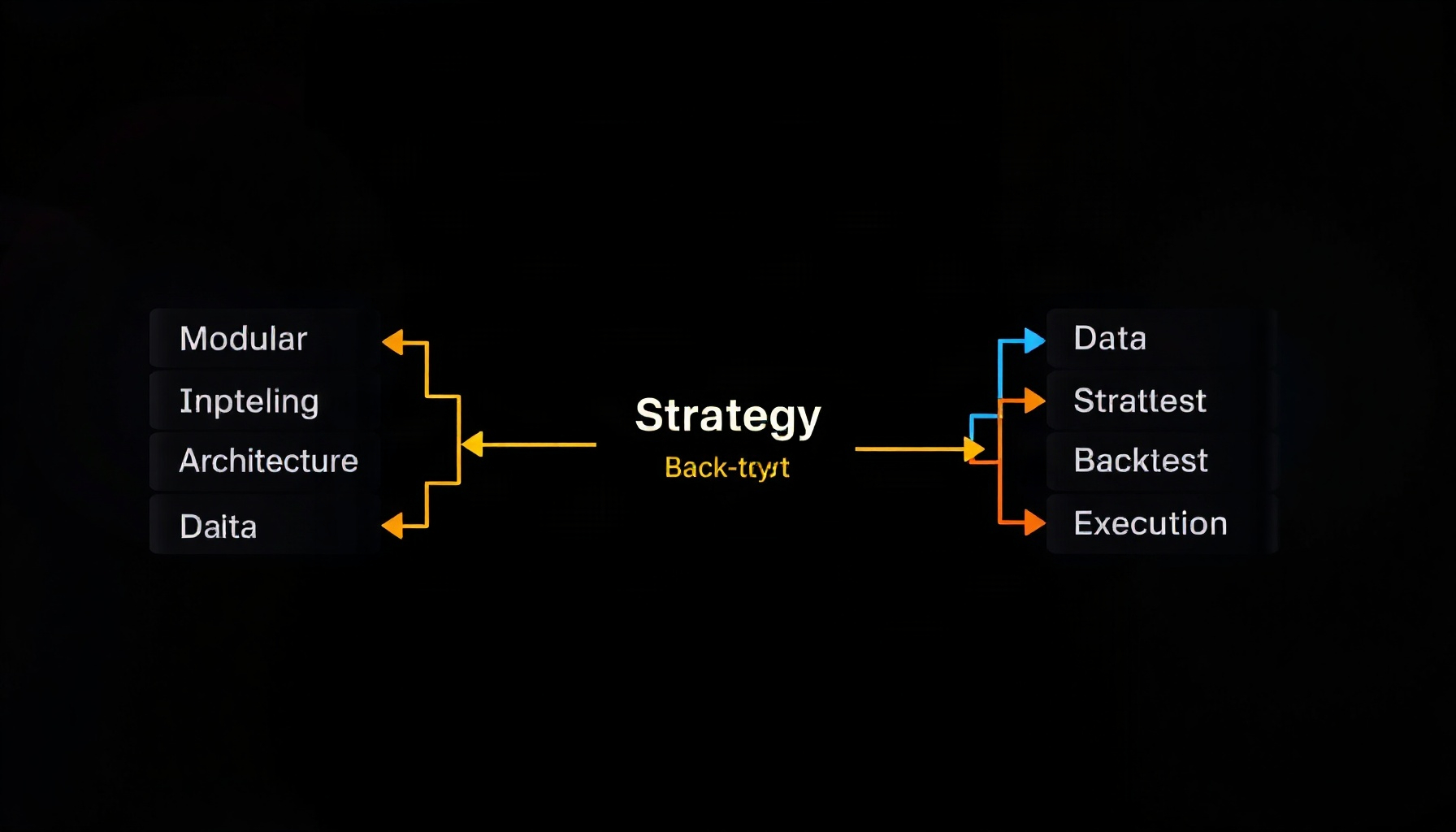
The VeriCUA loop translates to market-data QA as context inspection, rubric synthesis with hard and soft end-state requirements, active exploration of unresolved checks, and deterministic arbitration. The table below maps each stage to a concrete market-data check, and the hard-versus-soft distinction sets how much evidence a missing requirement needs before it can fail a dataset.
| VeriCUA stage | In the paper | Market-data analogue | Example check |
|---|---|---|---|
| Context inspection | Explore app/recording: files, schemas, accessibility trees | Profile the dataset: schema, timezone, frequency, calendar, vendor revision flags | Confirm the price frame’s timezone and session calendar before any value check |
| Rubric synthesis (hard/soft) | End-state requirements from instruction + context; hard = mandatory | Hard: every session date present; hard: adjusted = raw × factor; soft: no duplicate timestamps | “Exactly one bar per session date,” not “at least one” |
| Active exploration | Probe only unresolved requirements; findings steer the next action | Flag asserted → read the split endpoint; counts match but values differ → inspect overlap window | Fetch split_from/split_to/historical_adjustment_factor and recompute |
| Rule-based arbitration | Deterministic per-requirement status; 3-way verdict | success/fail/abstain per requirement, re-evaluable without re-probing | Re-run arbitration on stored findings after a vendor revision |
| Attested vs asserted | Post-action frames/file reads vs the agent’s own completion message | Recomputed adjusted = raw × factor vs vendor’s adjusted=true flag |
A flag directs the probe; the recomputation closes it |
| Abstain | Correct outcome when evidence can’t settle a requirement | Mark series unresolved, exclude from backtest universe — never silently “fix” | Drop the ticker from the universe rather than forward-filling the gap |
Context inspection means profiling before asserting: schema, timezone, frequency, calendar, and vendor revision flags. For exchange sessions, exchange_calendars gives the session set instead of assuming calendar days. Corporate actions arrive as events with historical_adjustment_factor, split_from, split_to, and execution_date; the Polygon splits endpoint describes these as “adjustment factors that can be used to normalize historical prices to today’s share basis.” That wording matters because normalization is a recomputation, not a flag. Macro series add another layer: ALFRED exposes each vintage available on a given date, and FRED API docs describe the release model; pandas DataFrame.asof is the join primitive for point-in-time alignment. Great Expectations docs show how to make such checks first-class rather than ad hoc assertions.
Asserted vs attested: the one rule to steal
The one rule to steal is that asserted evidence may guide inspection but cannot by itself mark a requirement met. A vendor’s adjusted=true flag is asserted; recomputing adjusted as raw times the split factor is attested; a second vendor is corroboration. Only grounded, executed reads can close a check.
| Evidence type | Market-data example | What it can prove |
|---|---|---|
| Asserted | vendor adjusted=true flag, pre-action frame |
directs a probe only |
| Attested | recomputed adjusted = raw × factor, calendar cross-check | can mark met or refute |
| Corroborated | two independent vendors or probes agree on a refutation | can mark unmet |
The distinction is not philosophical; it is about what an artifact can prove. An asserted finding is the agent’s or vendor’s own statement that work is done. It may steer the next probe, but it cannot close a requirement. An attested finding cites an executed read, and the harness rejects citations that match no executed call. Source attributes decide the weight: a frame before an action shows intent, while a frame after shows outcome; a persistent artifact answers a different question than volatile interface state. Corroboration raises the bar for failure: an unmet verdict needs refutations from separate probes, so one bad read cannot fail a dataset. This is why yfinance defaults and Databento docs bar semantics should be treated as claims to test, not facts to trust. For point-in-time macro work, a vintage from ALFRED is attested evidence for what was knowable on a date; a latest-value pull is not. The same discipline helps detecting backtest overfitting because unsupported labels leak into training data. If a requirement stays unknown, mark the series unresolved and exclude it, not forward-fill or default it to pass.
Rubric synthesis: end-state requirements, hard and soft
Rubric synthesis turns an instruction and dataset context into end-state requirements with hard and soft severities. Requirements must describe the end state rather than the procedure, and counts must be exact — in our rubric, exactly one row per session date rather than at least one. A hard requirement can fail a dataset on a single attested refutation; a soft one has to clear the corroboration bar first.
Hard requirements are mandatory for a dataset to be usable: every session date present per exchange calendar, and adjusted prices reproduce raw multiplied by the split factor. Soft requirements raise the evidence bar before they can refute, as with duplicate timestamps or internally inconsistent revision flags. The end-state rule prevents process theater: “do not invent process requirements; if the end state is right, the route does not matter.” Exact counts matter because a vendor can satisfy “at least one bar” while still dropping a session. Our rubric makes that concrete: “exactly one new artifact” becomes exactly one bar per session date. This also keeps purged K-fold cross-validation honest, because a silently duplicated timestamp can leak future information into a fold. Use QuantConnect US-equity data docs or Databento docs to pin down bar frequency and session semantics before writing the rubric.
Active exploration: probe only what is unresolved
Active exploration probes only unresolved requirements, and findings steer the next read. If a vendor flag is asserted, read the split endpoint; if row counts match but values differ, inspect the overlap window. The paper notes a verification pass issues tens of tool and model calls per trajectory, far more than a single-call judge, so reserve it for bulk filtering rather than interactive checks.
The loop is query-driven, not checklist-driven. A vendor’s adjusted=true flag is asserted evidence, so the next probe reads the Polygon splits endpoint and recomputes. Matching row counts with differing values sends the probe to the overlap window, where a timezone or session-calendar mismatch often explains the gap. exchange_calendars supplies the session set, and QuantConnect US-equity data docs clarify request semantics. Cost is the design constraint: tens of calls per trajectory makes this suitable for offline curation, reward assignment, and pre-backtest filtering, not for an interactive notebook. The same probe discipline improves information coefficient and signal decay studies, where a stale vendor revision can masquerade as alpha. Keep probes read-only; VeriCUA never writes to the environment it verifies, and market-data QA should inherit that discipline.
The arbitration function in stdlib Python
The arbitration function is a deterministic aggregator: a requirement is met only with at least one attested support, unmet only with at least two independent attested refutations, and otherwise unknown. The task verdict is success if all hard requirements are met, fail if any is unmet, and abstain otherwise. The block below uses only the Python standard library.
The code is synthetic and seeded, and it was not run against a live feed. It implements the rules as inline comments keyed to the paper’s arbitration section: asserted supports are collected but never sufficient, while a single attested refutation leaves a requirement unknown. The demo deliberately includes a vendor-style adjusted=true finding that does not mark R2 met.
from dataclasses import dataclass
from typing import List


@dataclass
class Requirement:
    id: str
    text: str
    hard: bool


@dataclass
class Finding:
    req_id: str
    verdict: str  # "support" | "refute"
    evidence: str
    attested: bool


def arbitrate(findings: List[Finding], requirements: List[Requirement]) -> dict:
    by_req = {r.id: [] for r in requirements}
    for finding in findings:
        by_req[finding.req_id].append(finding)

    status = {}
    for requirement in requirements:
        rid = requirement.id
        # (a) met iff at least one ATTESTED support; asserted supports never suffice.
        attested_supports = [
            f for f in by_req[rid]
            if f.verdict == "support" and f.attested
        ]
        # (b) unmet iff >= 2 independent attested refutations from separate probes.
        attested_refutes = [
            f for f in by_req[rid]
            if f.verdict == "refute" and f.attested
        ]
        if attested_supports:
            status[rid] = "met"
        elif len(attested_refutes) >= 2:
            status[rid] = "unmet"
        else:
            # (c) otherwise unknown
            status[rid] = "unknown"

    hard_ids = [r.id for r in requirements if r.hard]
    # (d) task verdict: success iff all hard met; fail iff any unmet; else abstain.
    if any(status[rid] == "unmet" for rid in status):
        verdict = "fail"
    elif all(status[rid] == "met" for rid in hard_ids):
        verdict = "success"
    else:
        verdict = "abstain"
    return {"requirements": status, "verdict": verdict}


def explore(unresolved: List[str]) -> List[str]:
    # Active exploration: probe names only for unresolved requirement IDs.
    return [f"probe:{rid}" for rid in unresolved]


def _decisive(rid: str, findings: List[Finding], status: str) -> str:
    pool = [f for f in findings if f.req_id == rid]
    if status == "met":
        chosen = next(f for f in pool if f.verdict == "support" and f.attested)
    elif status == "unmet":
        chosen = next(f for f in pool if f.verdict == "refute" and f.attested)
    else:
        chosen = pool[-1]
    return chosen.evidence


if __name__ == "__main__":
    requirements = [
        Requirement("R1", "all session dates present per exchange calendar", True),
        Requirement("R2", "adjusted prices reproduce raw x split factor", True),
        Requirement("R3", "no duplicate timestamps", False),
        Requirement("R4", "revision flags internally consistent", False),
    ]
    findings = [
        Finding("R1", "support", "calendar cross-check read: 252/252 session dates present", True),
        Finding("R2", "support", "vendor payload says adjusted=true", False),
        Finding("R2", "refute", "recomputed mismatch on 2024-06-10: raw 100.0 x 0.5 != vendor 49.0", True),
        Finding("R3", "support", "timestamp uniqueness check: 0 duplicates", True),
        Finding("R4", "refute", "revision flag A conflicts with flag B on 2024-01-05", True),
        Finding("R4", "refute", "vendor changelog mentions a revision", False),
    ]
    result = arbitrate(findings, requirements)
    for requirement in requirements:
        rid = requirement.id
        status = result["requirements"][rid]
        print(f"{rid}: {status} ({_decisive(rid, findings, status)})")
    print(f"FINAL VERDICT: {result['verdict']}")

    # Second scenario: one more ATTESTED refutation on R4 corroborates the first.
    corroborated = findings + [
        Finding("R4", "refute", "second independent read disagrees on revision date", True),
    ]
    print(f"CORROBORATED VERDICT: {arbitrate(corroborated, requirements)['verdict']}")
Running that synthetic demo prints R1: met, R2: unknown, R3: met, R4: unknown, then
FINAL VERDICT: abstain — the vendor’s adjusted=true support on R2 is asserted, so it cannot
close a hard requirement. The second scenario adds one attested refutation on R4, reaches the
corroboration bar, and prints CORROBORATED VERDICT: fail.
Three-way verdicts and the discipline of abstaining
Three-way verdicts make abstention a first-class outcome rather than a silent repair. A dataset is marked unresolved and excluded from the backtest universe when evidence cannot settle it. This protects downstream curation and reward assignment from unsupported labels, and it is safer than forward-filling or defaulting to pass.
Abstention is not a failure of the verifier; it is the correct answer when evidence cannot decide. The paper’s coverage limit is honest: offline verification falls back to a single-pass initial judgment on 23% of WebArena trajectories because the recording holds no evidence for some requirement. Market-data pipelines should copy that humility. If a series has unresolved calendar gaps, unexplained value mismatches, or ambiguous revision flags, mark it unresolved and drop it from the universe rather than silently fixing it. This matters for realized volatility estimators, where a single bad bar can dominate a variance estimate, and for Amihud illiquidity, where duplicate timestamps inflate turnover. Framework docs such as NautilusTrader docs show how stale inputs propagate into execution and backtest results. Vendor docs such as Alpha Vantage and Ken French Data Library are useful references, but their outputs still need attested checks against your own calendar and corporate-action recomputation.
What the paper’s numbers say about the design
The paper reports exact accuracy and false-positive-rate gains for VeriCUA over VLM judges, auto-generated checkers, and stronger baselines. AndroidWorld reaches 90.5 accuracy with 7.7 FPR, ScienceBoard reaches 86.4 accuracy with 5.4 FPR, and the design rejects about 80% of false completion reports. A stronger backbone helps VeriCUA more than CUAJudge, which argues that procedure matters more than model scale.
Online, with gemini-3-flash-preview as backbone and each benchmark’s official evaluator as gold, abstentions counted as fail, VeriCUA reaches AndroidWorld 90.5 accuracy, 89.2 F1, 7.7 FPR, 82% decided rate, and 95.1 accuracy on decided cases; OSWorld 79.5 accuracy, 13.9 FPR, 78% decided, 88.7 decided accuracy; ScienceBoard 86.4 accuracy, 5.4 FPR, 70% decided, 91.6 decided accuracy. The VLM judge and auto-generated checker are worse on every online environment, with ScienceBoard FPR roughly four times VeriCUA’s. Offline, VeriCUA scores 70.4 on OSReward-Hard, 87.2 on OSReward, 82.7 on WebArena, 94.3 on AndroidWorld, and 86.3 on OSWorld, ahead of TRM, CUAJudge, and OS-Themis. Its advantage is larger on hard subsets. Hybrid GUI plus state reads raises decision rate and recall with no FPR increase, and every extra correct decision came from a file or application-store read. A matched budget still leaves VeriCUA ahead at 86.4 on OSReward and 68.7 on OSReward-Hard. Swapping flash for gemini-3.1-pro-preview raises VeriCUA from 70.4 to 73.1 on OSReward-Hard, while CUAJudge drops 0.7 and OS-Themis gains 0.4. A blinded adjudicator supported VeriCUA on 63% of gold-label disagreements. AdaRubrics is related, but deterministic arbitration is the part worth porting.
FAQ
Can a vendor’s adjusted=true flag ever mark a requirement met?
No. An asserted flag is a completion message, not grounded evidence. It can direct the next probe, but only an attested read, such as recomputing adjusted as raw times the split factor, can mark the requirement met. A second vendor can corroborate a refutation, never a flag.
When should a market-data check abstain instead of fail?
Abstain when evidence cannot settle a requirement; fail only when at least two independent attested refutations agree. Abstention protects downstream curation and reward assignment from unsupported labels. In market data, mark the series unresolved and exclude it from the backtest universe rather than forward-filling or defaulting to pass.
Does VeriCUA claim to have tested market data?
No. VeriCUA is about computer-using agents and benchmarks such as AndroidWorld, OSWorld, ScienceBoard, OSReward, and WebArena. The mapping to market-data QA in this article is our analogy. The paper makes no market-data claims, and we did not run its verifier against a live feed.
How is this different from a Great Expectations suite?
A Great Expectations suite encodes deterministic expectations over data, while this loop adds attested-versus-asserted evidence and a three-way verdict. Vendor flags can satisfy expectations if written naively; here they never close a requirement. The arbitration result is also re-evaluable from stored findings after a vendor revision.
Is a three-way verdict worth the extra probing cost?
Yes for bulk curation and pre-backtest filtering, where correctness matters more than latency. No for interactive exploration. The paper notes tens of calls per trajectory, an order of magnitude more than a single-call judge, but the result is a reusable, deterministic verdict that can be rerun without re-probing.
The Bottom Line
Steal the evidence discipline, not the agent. Asserted evidence can steer probing but never close a requirement; abstain beats a silent fix; deterministic arbitration makes checks re-evaluable without re-probing. The market-data mapping is ours, and it turns vendor flags into hypotheses rather than proofs.
Use vendor flags as probes, not verdicts. Recompute adjusted prices from raw and split factors, enforce exact session coverage, and drop unresolved series instead of repairing them. The cost is real, but it is paid once per dataset and reused across backtests.
How This Guide Was Built
This guide is based on the VeriCUA paper, vendor API documentation, and open-source library docs, and we did not run the verifier against a live market-data feed. The demo is synthetic and seeded. The mapping to market data is our analogy, not a claim the paper makes.
Sources include VeriCUA abstract and full text, plus official documentation for exchange_calendars, Polygon splits endpoint, ALFRED, and Great Expectations docs. All code is standard library only and synthetic. We make no performance or accuracy claims about any market-data feed, and no benchmark in this post was run by us.
← Back to all posts