Fed Hike Odds Hit 87%: Recalibrate Your Quant Models
August’s consumer price index came in hot — and markets repriced instantly. The implied probability of a 25-basis-point hike at the September 16 FOMC meeting leapt to roughly 87%, while Brent crude held above $100 a barrel amid ongoing Iran supply disruptions. For quants, data scientists, and ML engineers, the message is blunt: the discount rates, energy betas, and cross-asset correlations your models trained on are now stale. Here is what changed this week, and exactly which inputs to recalibrate before Wednesday’s vote.
How This Was Verified
This analysis was verified through desk research using official data releases and primary reporting — including CNBC, Yahoo Finance, Fidelity, Kiplinger, MUFG, and Davis Wright Tremaine — with the August CPI report anchoring the inflation figures, and every statistic traced back to its original source.
No trading system was run, executed, or backtested hands-on for this article; all figures are as-reported numbers from the cited sources, last verified in September 2026. Where we reference rate probabilities attributed to CME FedWatch, treat them strictly as a market-consensus estimate of FOMC action — not a guaranteed outcome. Standing methodology notes live on our research hub.
August CPI Comes In Hot, Reinforcing a Hawkish Fed
August CPI came in hot, reinforcing the Fed’s hawkish tilt: headline inflation accelerated 0.4% month over month and 3.4% year over year in August 2026, while core CPI rose 0.3% m/m and held at 2.4% y/y, per CNBC’s CPI coverage, with shelter adding 0.3% on the month and food up 2.7% from a year earlier.
The composition matters as much as the print. Energy prices were 16.3% higher year over year and gasoline 27.4% higher — the dominant driver of the reacceleration — a risk Kiplinger’s preview flagged heading into the release. Rates moved too: the 2-year Treasury yield rose 4.6 basis points to 4.594% as traders rotated toward a hike, according to CNBC.
Fed Rate Hike Odds Jumped to 87% After the Print
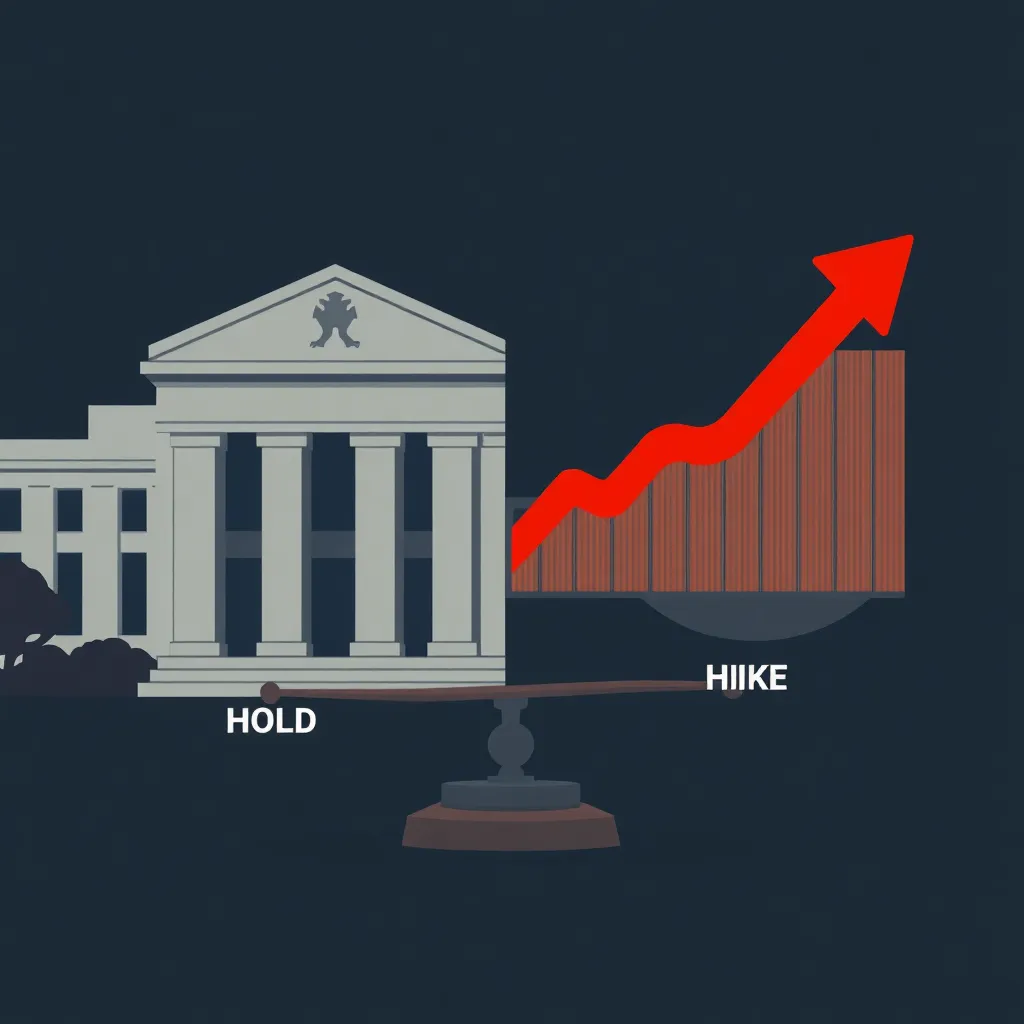
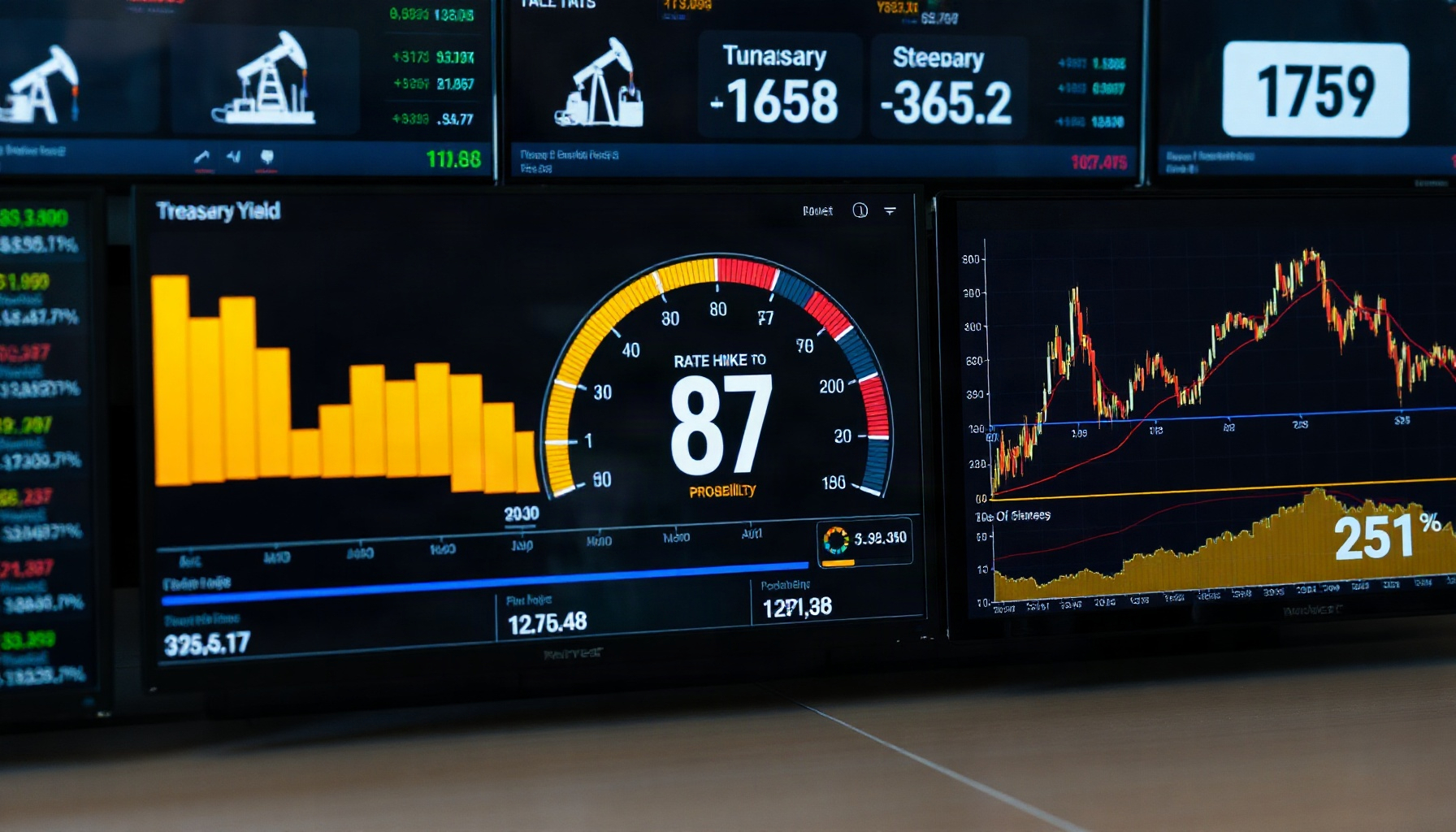
Fed rate hike odds jumped to 87% after the print: Yahoo Finance’s live markets blog reported roughly an 87% implied probability of a 25-basis-point hike at the September meeting, up from 72% a day earlier and just 50% a week earlier.
The repricing has been building for weeks. Odds sat near 38% after Jackson Hole and climbed above 60% by early September, per Fidelity’s weekly market update, and MUFG’s Fed call now frames tightening as the base case. The 10-year Treasury yield finished just below 5%, meaning the long end is absorbing both hike risk and an energy-driven inflation premium. For a scenario-by-scenario breakdown, see our Fed September FOMC hike vs. hold analysis.
How Do I Adjust My Quant Model for a Fed Rate Hike?
You can adjust your quant model for a Fed rate hike by repricing four inputs before Wednesday, September 16 — the policy rate path, energy-beta correlations, the term premium, and yield-curve shape — since the FOMC vote is confirmed for that date on the Fed’s official calendar.
- Rate path. Rebuild your scenario tree. The 3.50–3.75% target range has held throughout 2026 under Chair Kevin Warsh, so trailing data reflects a static policy regime; reweight simulations to put roughly 87% probability on a 25bp move and preserve a hold branch for the fat tail.
- Energy-beta correlation. With energy CPI up 16.3% y/y and gasoline up 27.4%, sector betas estimated on trailing windows are contaminated by the oil shock; re-estimate on stress windows and shrink toward long-run means before trusting factor neutrality.
- Term premium. A 2-year at 4.594% against a 10-year just under 5% leaves the long end thinly compensated; our Treasury term premium analysis details what that compression means for duration-weighted signals.
- Curve shape. Replace flat-curve assumptions with a steeper short end; discount factors, carry, and roll-down metrics all shift materially if the hike lands.
Oil Prices Stay Above $100 Amid Iran Supply Disruptions
Oil prices stayed above $100 amid Iran supply disruptions: Brent settled at $104.61, down 2.8% after peaking near $108 on Thursday, while WTI settled at $100.05, according to CNBC’s oil and Iran coverage, keeping energy-driven inflation pressure squarely in front of the FOMC.
The disruption is structural, not sentimental. The Strait of Hormuz has been largely closed for roughly six months, removing about 15 million barrels per day; Saudi Arabia’s East-West pipeline — roughly 7 million bpd of capacity — is shut after drone attacks; and Houthis have seized Mokha while advancing on Perim Island. Diesel has hit a record above $6 per gallon, feeding directly into headline CPI, per Yahoo Finance.
Equities Post Weekly Losses Despite Friday Rally
Equities posted weekly losses despite a Friday rally: the S&P 500 gained 0.86% to 7,656.98, the Dow rose 0.98% to 52,573.29, and the Nasdaq added 0.96% to 26,333.04, yet all three indexes logged weekly declines after a four-day losing streak, per Yahoo Finance’s live blog.
The VIX fell 11.2% to 15.84 into the weekend — compressed implied volatility heading into an FOMC meeting with 87% hike odds is exactly the regime where short-vol and carry signals flip without warning. Stress-test positions against a post-decision vol spike, and revisit our standing methodology notes on the research hub.
SEC Proposes a Broad Crypto Asset Framework
The SEC proposed a broad crypto asset framework on August 18, 2026: a 401-page release titled Regulation Crypto Assets, featuring a $5 million startup exemption, a $75 million fundraising exemption, a conditional safe harbor, and 154 requests for comment, under Chair Paul Atkins, per Davis Wright Tremaine.
Fundraising tiers are split at $20 million (Tier 1) and $75 million (Tier 2), with public comments due around October 20. For quants, the framework touches tokenized market data, on-chain execution venues, and the compliance overhead attached to any crypto factor exposure — worth tracking even if your book is equities-only.
Recalibration Inputs At A Glance
Recalibration inputs at a glance are consolidated in the table below: the 87% hike probability, the hot August CPI components, yields, and oil prices, each tied to a primary source such as the CNBC CPI report or Yahoo Finance’s live blog for fast model updates.
| Input | Verified Value | Primary Source |
|---|---|---|
| Headline CPI (Aug 2026) | +0.4% m/m, +3.4% y/y | CNBC |
| Core CPI (Aug 2026) | +0.3% m/m, +2.4% y/y | CNBC |
| Energy / gasoline CPI (y/y) | +16.3% / +27.4% | CNBC |
| 25bp hike probability | ~87% (from 72% a day, 50% a week earlier) | Yahoo Finance |
| Fed funds target range | 3.50–3.75% throughout 2026 | CNBC |
| 2-year Treasury yield | +4.6 bp to 4.594% | CNBC |
| 10-year Treasury yield | Finished just below 5% | Yahoo Finance |
| Brent crude | $104.61 (−2.8%), peaked ~$108 | CNBC |
| WTI crude | $100.05 | CNBC |
| Diesel | Record above $6/gal | CNBC |
| S&P 500 / VIX (Friday) | 7,656.98 (+0.86%) / 15.84 (−11.2%) | Yahoo Finance |
FAQ
These frequently asked questions distill the week’s verified developments — including the 87% implied hike odds per Yahoo Finance’s live blog, the SEC’s crypto framework per Davis Wright Tremaine, and upcoming competitions — so each answer stands on its own without rereading the post.
How Do Fed Rate Hike Odds Affect Algo Trading Strategies?
Fed rate hike odds affect algo trading strategies by moving the discount rate, reshaping factor betas, and compressing volatility premia: with odds at roughly 87% versus 50% a week earlier, carry, duration, and short-vol signals all need re-estimation before the FOMC decision, per Yahoo Finance’s live blog.
What Is the SEC Regulation Crypto Assets Proposal?
The SEC Regulation Crypto Assets proposal is a 401-page framework published August 18, 2026, that would create a $5 million startup exemption, tiered fundraising exemptions at $20 million and $75 million, and a conditional safe harbor, with 154 comment questions due around October 20, according to Davis Wright Tremaine.
Are There Any Upcoming Quant Competitions to Watch?
Yes: the SoAI 2026 AI Algorithmic Trading Competition runs September 24–26, 2026, in Singapore, offering quants a timed, judged venue to test rate-shock-resilient strategies just days after the FOMC vote; registration details and rules are published on the official SoAI GitHub repository.
← Back to all posts